Linkurious brings graph visualization and analytics to Google BigQuery Graph
Linkurious Decision Intelligence Platform is now compatible with Google BigQuery Graph via a native connector. Already compatible with Google Spanner Graph, organizations using Google BigQuery can now also visually explore their data directly within Linkurious software, without any additional infrastructure or data pipeline.
Google BigQuery is where many data teams already work. It's where the data lives, where the pipelines run, where numerous analysts spend their days to run large analytical workloads.
Organizations can now bring graphs to BigQuery data. With Google BigQuery Graph, you can define and query hundreds of millions to billions of nodes and edges natively, without moving data to a specialized graph database or building complex ETL pipelines.
What's more, native integration between Spanner Graph and BigQuery Graph enables you to combine operational and historical data into a single virtual graph — without moving data out of either system. Graph analytics now lives fully where the data already is.
For many data and analytics teams, this removes the biggest historical barrier to graph adoption: the need for a dedicated graph database and the expertise to run it.
While Google BigQuery Graph makes it possible to build and query property graphs at data warehouse scale for analytical workloads on historical data, Linkurious helps all types of users make sense of it.
With Linkurious, data scientists, analysts, investigators, and business users can visually navigate millions of data points, easily analyze direct and indirect relationships, surface complex patterns, and uncover insights that would otherwise remain hidden in tabular views.
With this connector, BigQuery Graph users can:
- Visually navigate their BigQuery data as a graph, exploring millions of interconnected nodes and edges via an intuitive, interactive graph visualization interface designed for both technical and non technical-users.
- Uncover complex hidden patterns and relationships across entities in minutes instead of days using no-code query builder or Query AI, and transforming advanced queries into alerts or buttons.
- Run investigations collaboratively in the Linkurious shared workspace.
“We are excited about BigQuery Graph’s partnership with Linkurious, which brings intuitive visualization and decision intelligence directly to our users to democratize graph adoption at scale. Our customers can now leverage the massive analytical power of BigQuery to query complex relationships without moving their data, using Linkurious’s no-code interface to turn those results into actionable insights for investigators and analysts alike.” says Candice Chen, Product Manager, Google Cloud.
With Linkurious, your teams can explore Google BigQuery data visually. An analyst can open a graph workspace, search for an entity, and start navigating its connections the same way they would browse a map.
In practice, this unlocks a range of use cases:
- Financial crime, fraud and AML: Fraud rings, money mule networks, UBO identification, PEP/sanctions risks become visible when you stop looking at rows and start looking at connections.
- Cybersecurity: From threat analysis to incident response, actionable insights depend on connecting systems, data, and attackers at scale. Connect what others analyze separately and understand cyber risk faster.
- Supply chain risk: Multi-tier supplier relationships are hard to reason about in tables. As a graph, you can immediately see hidden dependencies and spot risk early.
- Network & IT: Get a unified, connected view of data, networks, and systems to help you with impact analysis, dependency mapping, and more.
- Enterprise knowledge graphs: BigQuery Graph enables you to turn documents, contracts, internal wikis, and reports into a structured, explorable web of information. Make your knowledge graph usable and searchable for your teams so they can uncover insights, validate connections, and turn models into decisions.
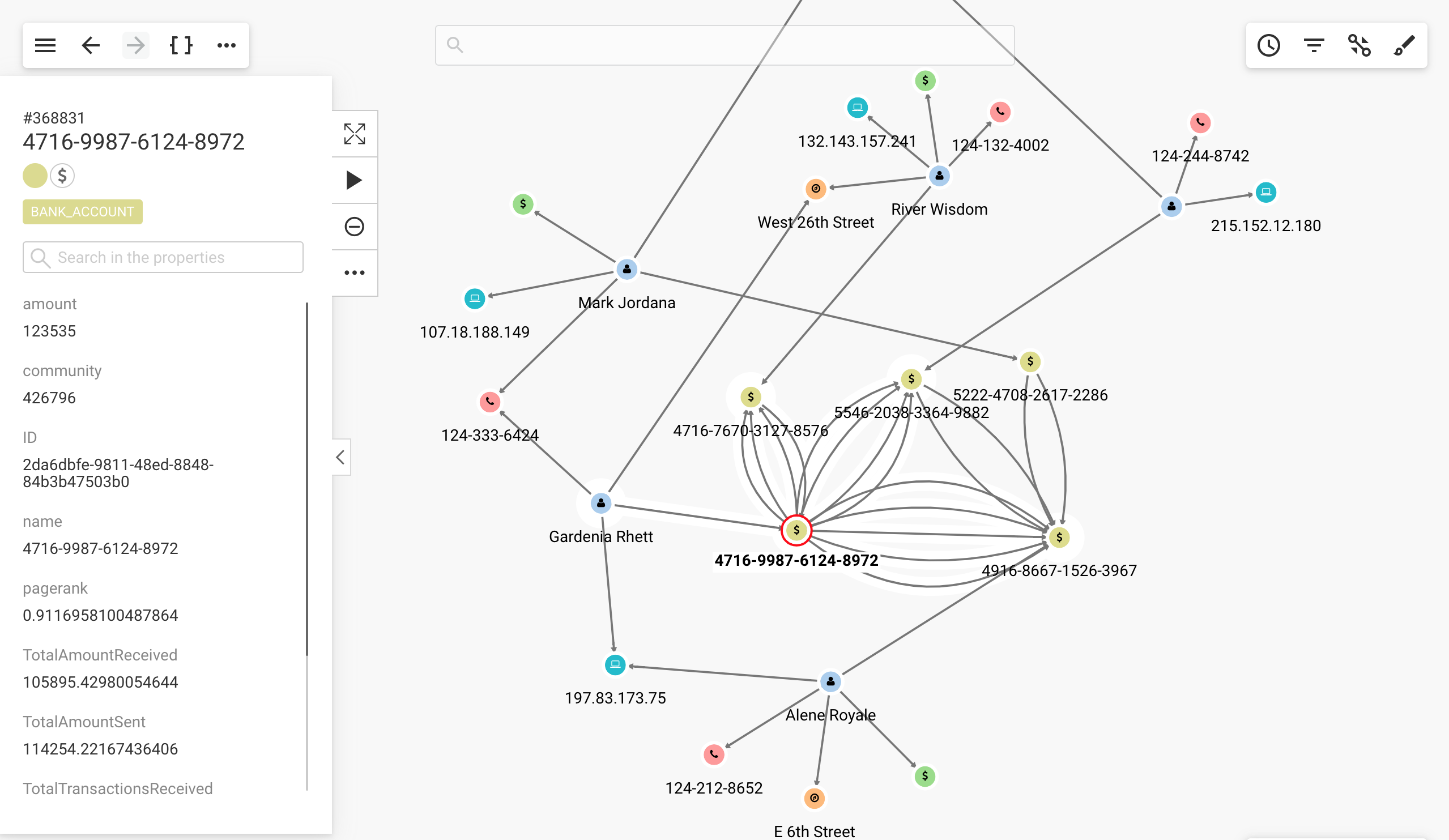
The launch of Google BigQuery Graph is part of a broader trend. Graph capabilities are increasingly being embedded directly into mainstream data infrastructure (data warehouses, transactional databases, analytical platforms) rather than existing in separate systems.
This reflects something fundamental: data has relationships, and those relationships carry meaning that tables and rows alone cannot surface. As AI applications become more deeply embedded in enterprise workflows, the ability to navigate connected data is fast becoming a foundational requirement, no longer a niche capability for a handful of technical users.
“Google Spanner Graph was the signal. BigQuery Graph confirms graphs are going mainstream.” says Sébastien Heymann, Co-founder of Linkurious. “For years, graph analytics required specialized databases, data experts, and a lot of patience. That's changing fast. Organizations can now build and query graphs with Google BigQuery. Linkurious makes sure the people who need those insights can actually access them. We're here to close that last mile.”
At Linkurious, we have spent over a decade building intuitive and user-friendly graph visualization and analytics software that makes graph data accessible by the people who actually need it. The expansion of our connectors to cover Google BigQuery Graph is a direct extension of that mission: wherever graph data lives, Linkurious should make it visible, meaningful and useful.
The Google BigQuery Graph connector is available starting with Linkurious Enterprise v4.3.3. If you're already running graph data in BigQuery or need more information, get in touch with us.
A spotlight on graph technology directly in your inbox.